- Blog
- How to Import a Car to the UK
How to Import a Car to the UK
Import cars from the EU to the UK with our step-by-step guide for dealers. Learn which documents you need, what taxes to pay, and how to register with DVLA.
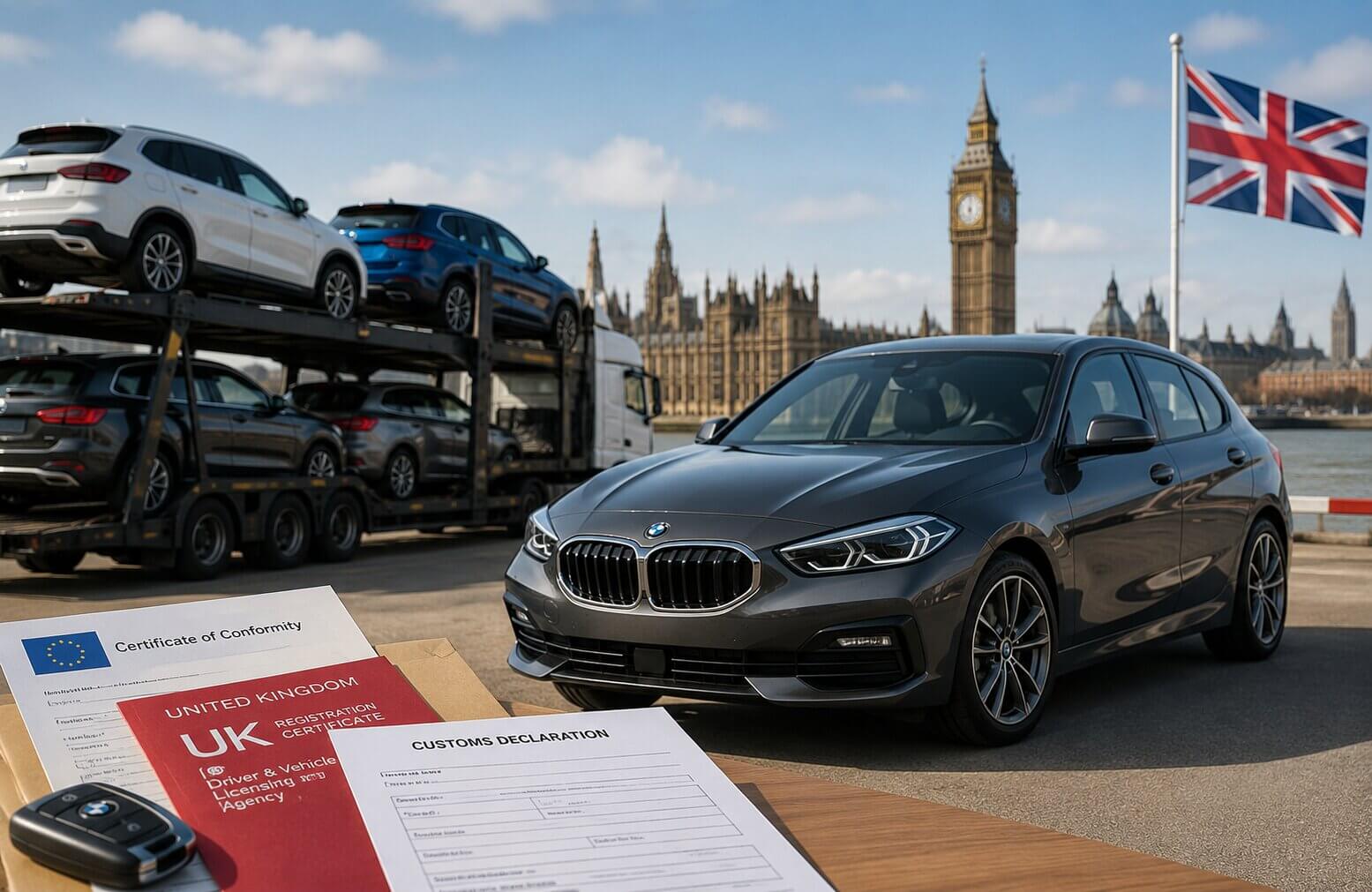
Are you looking for a wider choice of vehicles and specifications, at different price points? If so, you might consider importing cars from the EU.
Since the UK left the EU customs union, importing a vehicle from the EU into Great Britain involves a few extra steps.
However, with the right documents and preparation, the process is still manageable.
Let’s look at what the process involves!
Note: This guide mainly covers imports into Great Britain: England, Scotland, and Wales. Different rules may apply to Northern Ireland.
Import regulations of the UK
An important rule is that importing a vehicle from the EU into Great Britain involves both EU export requirements and UK import procedures.
So, don’t treat it as an intra-EU vehicle transfer, and remember that you’ll need to complete formalities on both sides.
Here are a few other legal and practical points to keep in mind.
The country of purchase is not always the country of origin
One legal factor to keep in mind is the country of origin.
If you buy a car from Germany or Belgium, this doesn’t automatically mean that the car has EU origin.
For customs purposes, origin depends on where and how the vehicle was manufactured, and whether it meets the rules of origin under the EU–UK Trade and Cooperation Agreement.
This matters because vehicles that qualify as EU-origin may enter the UK with zero customs duty, which can significantly affect your total import cost.
Left-hand-drive vehicles in the UK market
While there is no legal requirement for an imported vehicle to be right-hand drive (RHD), most buyers expect this steering wheel configuration.
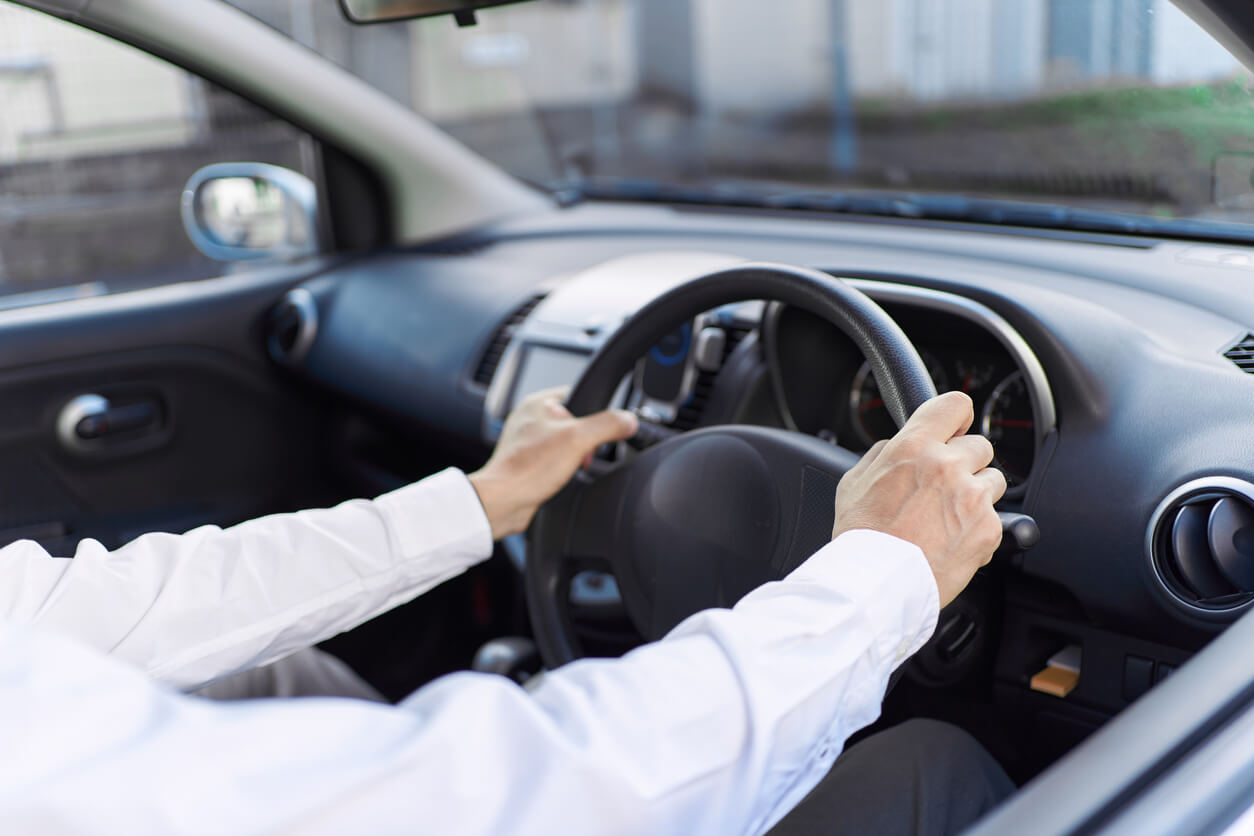
Left-hand-drive (LHD) vehicles may be more difficult to resell, so it’s worth considering the likely demand before you buy.
LHD cars can still make sense for:
- Rare vehicles
- Classic cars
- Vehicles intended for re-export
For more common models, RHD versions will usually be a more practical choice for the UK market.
Documentation for importing a vehicle to the UK as a business
Here’s a list of documents you’ll need for import.
It’s quite a long one, but most of the documents are straightforward to obtain.
► Vehicle purchase invoice
The vehicle purchase invoice proves the transaction value and identifies the buyer and seller.
It should contain both parties’ details, the vehicle’s identifying information, and the agreed price.
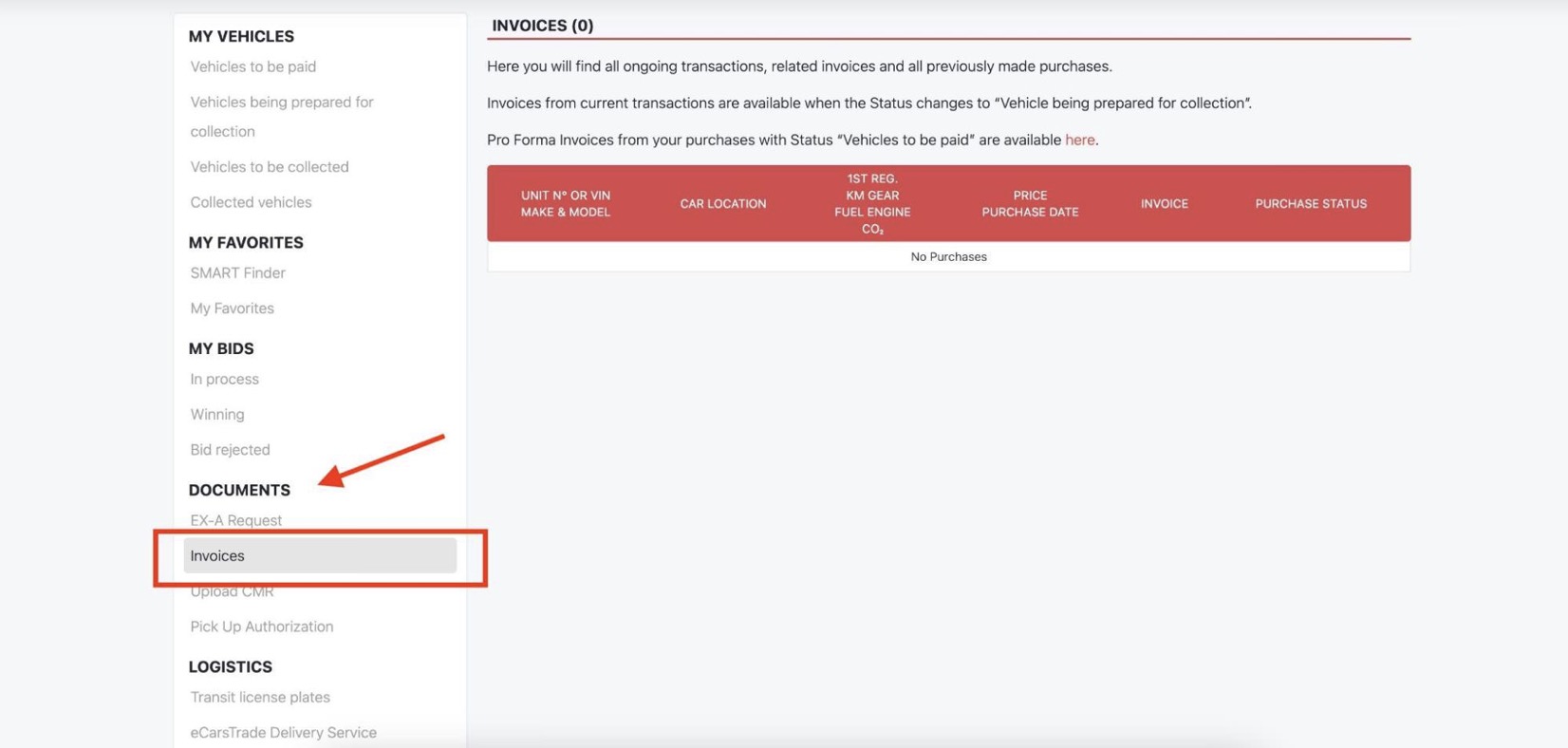
When buying through eCarsTrade, the invoice will be issued after payment, and you’ll be able to access it on your Personal Page.
► Original foreign registration documents
You’ll need the original registration certificate from the country where the vehicle was previously registered.
All cars on eCarsTrade are sold with their original registration papers, so you’ll easily be able to prepare this piece of documentation.
► Certificate of Conformity (CoC)
A Certificate of Conformity, or CoC, shows the vehicle’s technical details and confirms the standards it was built to meet.
You will normally need it when applying for approval for an EU-registered vehicle.
Most used cars are sold without the CoC. So, you should be prepared to purchase a copy from a provider like EuroCOC or COC Europe.
Note that for a left-hand-drive vehicle, the CoC may not be enough on its own.
Depending on the vehicle, you may also need GB Conversion Individual Vehicle Approval (IVA).
The safest option is to check with the Vehicle Certification Agency if the CoC is sufficient for the vehicle you are importing.
► EX-A export declaration
Because the vehicle is leaving the EU, you’ll need an EX-A export declaration.
Once customs accepts the declaration, it receives a Movement Reference Number, or MRN.
This number is used to track the export and confirm that the vehicle has left the EU. 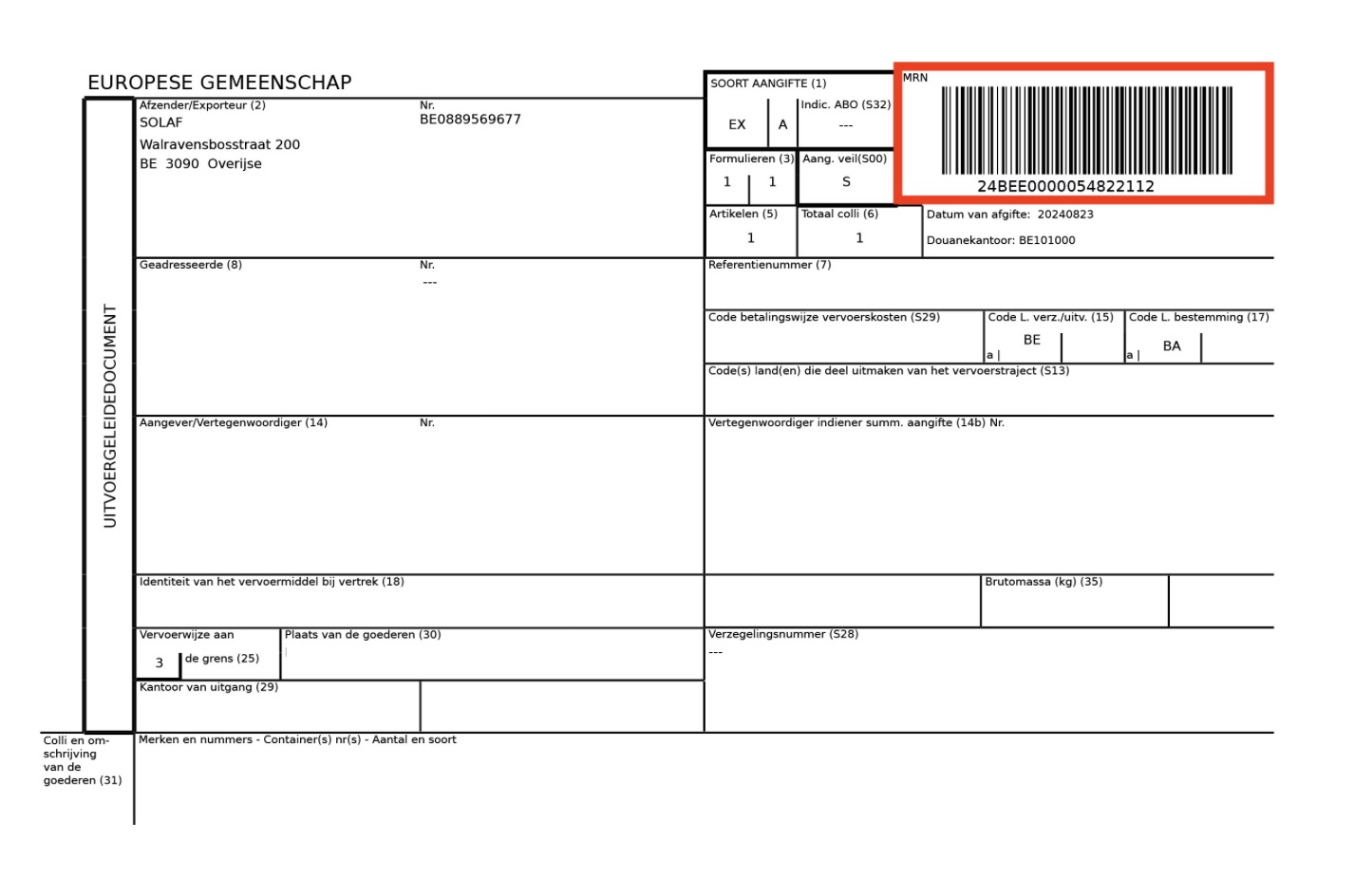
The EX-A and the MRN are important for two reasons.
First, you’ll need them to complete the export procedure and confirm that the vehicle has left the EU.
Also, if you’ve paid the VAT deposit as a non-EU buyer, you’ll need the MRN as proof of export so that you can get the deposit back.
► UK import declaration
You’ll also usually need a UK import declaration.
This is an electronic customs form that tells HMRC (His Majesty’s Revenue and Customs) what you’re importing, and it’s used to calculate any import VAT and customs duty you need to pay.
Your shipping company or customs agent will usually submit it for you, so confirm who will handle the import declaration before you arrange transport.
Your business will also need a GB EORI number for the customs declaration, so check that you have one before arranging the import.
► Proof of origin
If you’re planning to claim a preferential customs duty rate under the EU–UK Trade and Cooperation Agreement, you’ll need proof of origin.
This will usually be a statement on origin added by the EU seller to the invoice.
For vehicles worth more than €6,000, the exporter who is making a statement on origin will normally need to include their REX number.
Remember, buying a car in the EU doesn’t automatically make it EU-originating.
A Japanese-built car bought in Germany would not normally qualify, so make sure the seller can provide proof of EU origin before you buy.
► NOVA confirmation
Before registering the vehicle, you’ll need NOVA (Notification of Vehicle Arrivals) confirmation.
NOVA lets HMRC know that the vehicle has arrived in the UK and that you’ve paid or accounted for any VAT and customs duty.
You have 14 days from the vehicle’s arrival to submit the notification.
► MOT certificate
Since you’re importing a used car, you may need a valid MOT before registering it, depending on its age.
The MOT test can be recorded using the vehicle’s VIN because it doesn’t yet have a UK registration number.
A TÜV certificate, French contrôle technique or similar inspection from another country won’t replace a UK MOT.
► Proof of business details and address
Next, you’ll have to include copies of two documents confirming your business details.
At least one of them must show your current business address.
Some of the accepted documents include:
- An embossed Companies House registration certificate
- A VAT registration certificate
- A business bank statement issued within the last three months
- A business utility bill issued within the last three months
► DVLA registration application
To register the car with DVLA, you’ll have to submit the V55/5 form.
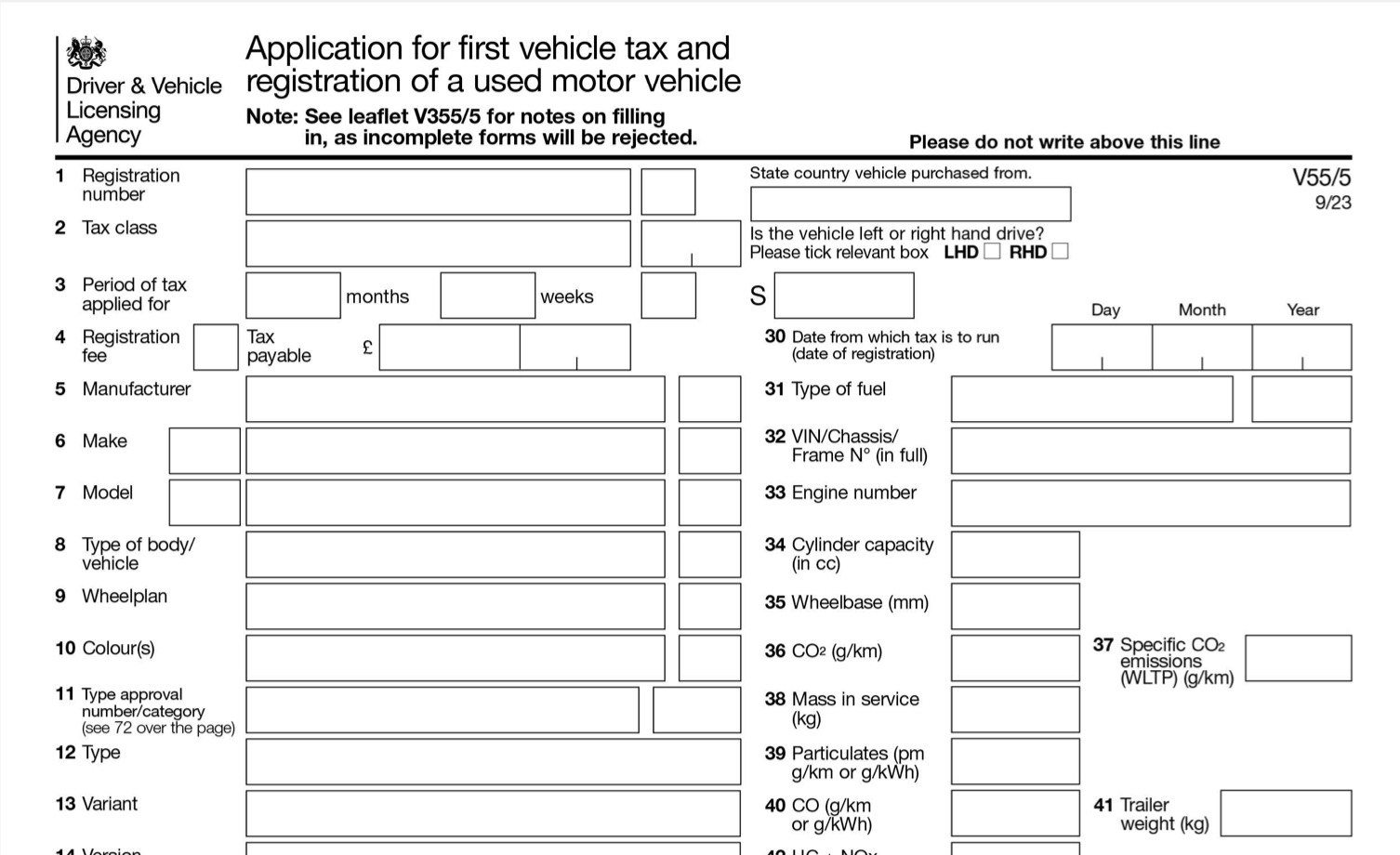
You can use the official guide to see which fields apply and where to find the information.
When sending the registration application, you’ll also need to include the required supporting documents.
Taxes when importing a car to the UK
Before buying a car from the EU, you should estimate the taxes you may need to pay when importing it into the UK. Here’s an overview of what to expect.
Customs duty
Customs duty for passenger cars is usually 10% of the vehicle’s customs value.
The exact rate depends on the vehicle’s commodity code, so you should confirm it using the UK Trade Tariff.
You may pay 0% customs duty if the vehicle qualifies as EU-origin under the EU–UK Trade and Cooperation Agreement.
Still, it’s not enough to buy a car from an EU country; you have to prove its origin.
You must have a valid statement of origin from the EU exporter, which is usually included on the invoice or another commercial document.
VAT
The standard UK VAT rate is 20%.
- The vehicle’s customs value
- Transport and shipping costs
- Other related import costs
- Customs duty, if applicable
Note that as a non-EU buyer, you might be asked to pay the seller’s local VAT as a deposit.
For instance, this would be 19% of the car’s price in Germany.
The seller will refund it once the vehicle leaves the EU and the export documents are confirmed.
Step-by-step process - from purchasing a car to importing it to the UK
Now, let’s see what the import process looks like, from buying the car to registering it with DVLA.
1. Select and buy the car
Start by choosing a car that fits your dealership’s needs, and that still makes sense when you consider the import costs.
eCarsTrade lets you narrow down the available cars by using filters like make, model, fuel type, mileage, and more.
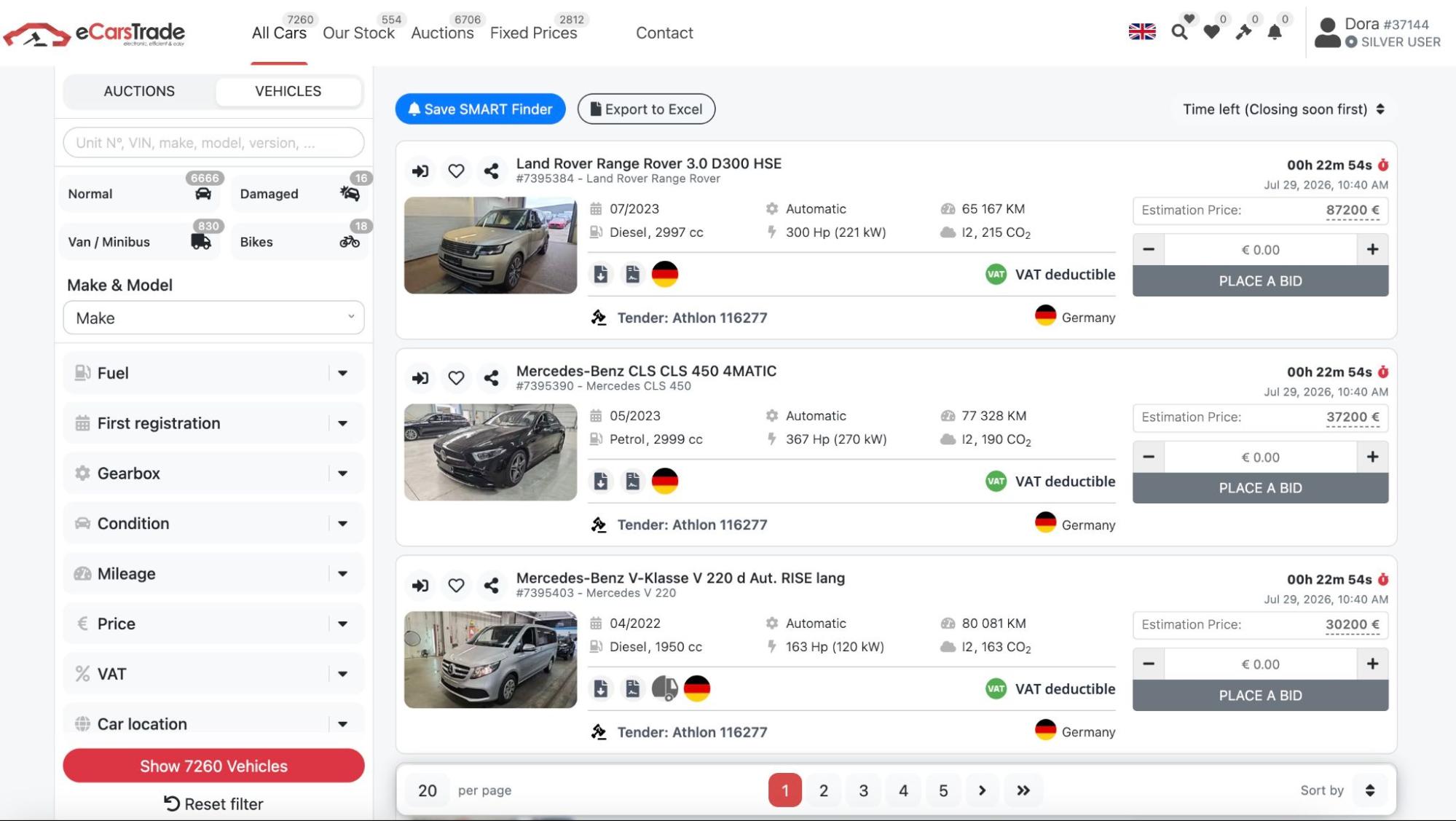
Before bidding, review the vehicle description and available documents.
Once you win the auction and complete the payment, you’ll receive the vehicle purchase invoice.
Some EU sellers may ask you to pay a VAT deposit, which they’ll refund once you prove that the vehicle has left the EU.
2. Arrange transport
Next, arrange transport from the vehicle’s location to your dealership.
Make sure the vehicle transport company you hire can handle both the EU export procedure and the UK border requirements.
You should also confirm which EU customs office the vehicle will leave through. You’ll need this information for the EX-A export declaration.
At this stage, ask the transport company who will handle:
- The EU export declaration
- The UK import declaration
- Customs clearance
- Ferry or tunnel bookings
- Transport insurance
Agree on these responsibilities before they collect the car.
3. Prepare the documents
You’ll then need to gather the following documents:
- Vehicle purchase invoice
- Original foreign registration documents
- Certificate of Conformity (CoC)
- GB Conversion Individual Vehicle Approval (IVA), if required
- Proof of EU origin, if you’re claiming a preferential customs duty rate
4. Request the EX-A declaration
The vehicle is leaving the EU, so you’ll need an EX-A declaration. On eCarsTrade, you can request it in the Documents section of your Personal page.
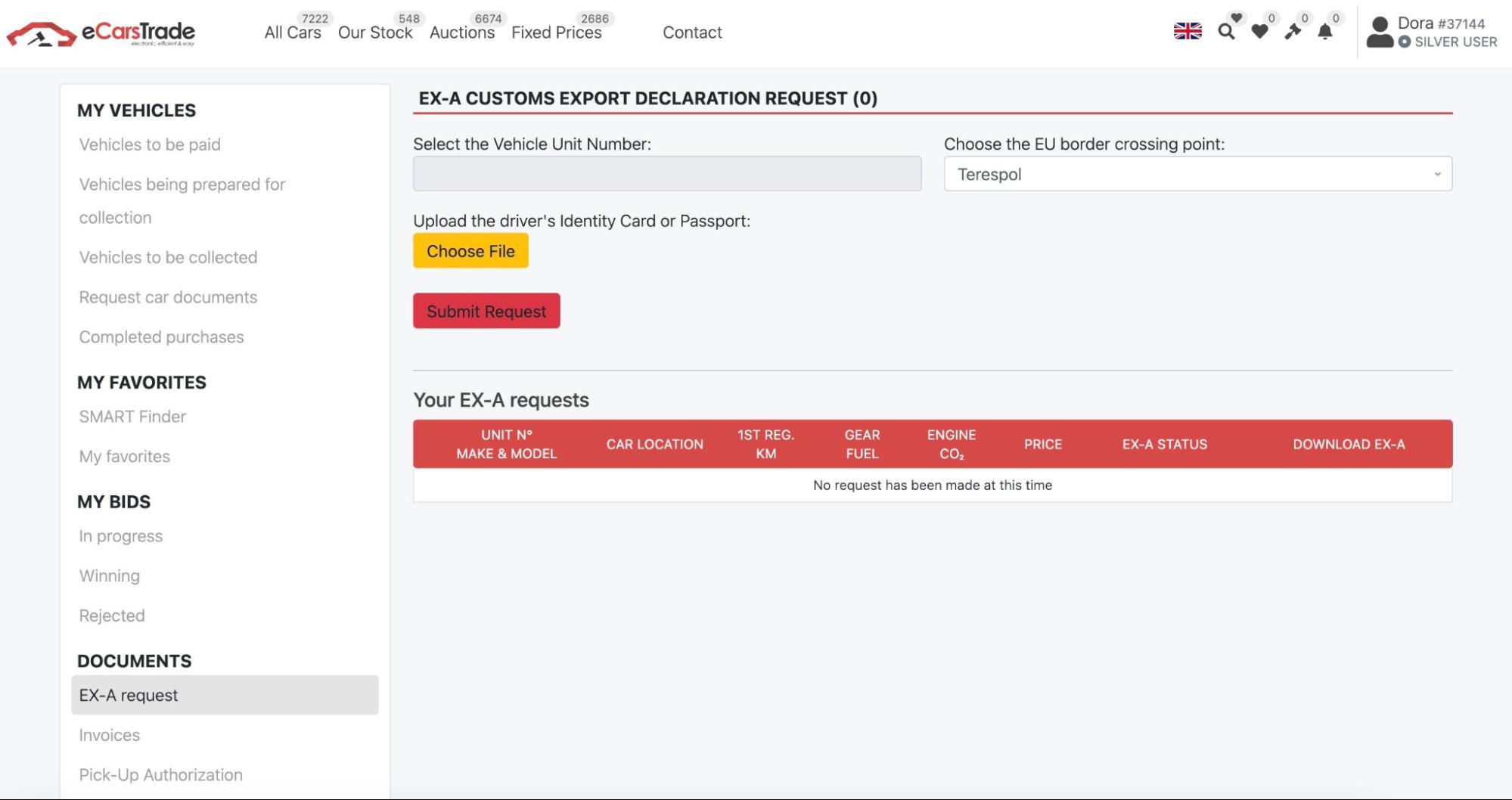
You’ll need to state the EU border crossing point when submitting your request.
The EX-A will contain the MRN number. You can use it to track the status of the export declaration in the European Commission’s MRN Follow-up tool.
5. Complete the UK import declaration
You usually need an import declaration when bringing a vehicle from the EU into Great Britain.
If you’ve decided to transport the car commercially, your shipping company or customs agent will normally submit the declaration before the vehicle arrives or at the UK border.
Provide the agent with the purchase invoice, foreign registration documents, vehicle identification details, and proof of origin if you intend to claim zero customs duty.
6. Clear customs and pay import taxes
When the vehicle enters Great Britain, it must clear UK customs.
Usually, your customs agent or transport provider will arrange payment or accounting for any customs duty and import VAT due.
Make sure you receive the customs documents, including the import declaration reference, as you may need them for the NOVA notification and registration process.
7. Request your VAT-deposit refund
If you paid a VAT deposit to the European seller, you can request the refund after the vehicle has left the EU.
Once the export is confirmed, send the seller proof that the vehicle has left the EU and request your VAT refund.
8. Notify HMRC through NOVA
You must notify HMRC through the NOVA service within 14 days of bringing the car into the UK.
HMRC must process the NOVA notification before you can register the vehicle with DVLA.
9. Obtain vehicle approval
You’ll then need proof that the vehicle meets UK environmental and safety requirements. In other words, you’ll need vehicle approval.
Depending on the car, you may be able to:
- Use its existing type-approval documents
- Apply for GB Conversion IVA
- Go through full Individual Vehicle Approval
The correct route depends on the car’s age, previous country of registration, type approval, steering position, and any modifications that have already been made.
Left-hand-drive cars may need changes to the headlights, speedometer, and rear fog light.
Right-hand-drive cars may need fewer changes, but you should still check whether the CoC is enough or if you need extra approval.
10. Go through an MOT if needed
Depending on the vehicle’s age and circumstances, you may need a valid MOT before you register it.
You can take an imported vehicle for an MOT before it receives a UK registration number. The testing station can create the MOT record using the VIN.
Remember that vehicle approval and the MOT serve different purposes.
Vehicle approval confirms that the vehicle meets UK technical requirements, while the MOT checks whether it is currently roadworthy.
11. Register the vehicle
If you’ve bought a car that’s previously been registered abroad, complete the form V55/5.
Submit the form with the required original supporting documents, payment, and evidence of approval.
Before registering the vehicle, DVLA requires:
- Processed NOVA notification
- Payment of any taxes due
- Proof of vehicle approval
DVLA may inspect the vehicle before issuing a registration number.

Get to know the UK used car market
The UK has a large used car market.
According to the Society of Motor Manufacturers and Traders, 7.8 million used cars were sold in 2025, which was 2.2% more than in 2024.
Sales remained high from January to March 2026, with more than two million used car transactions recorded.
Petrol and diesel cars still make up most of the market, but demand for electric and hybrid vehicles is growing.
During the first quarter of 2026, sales by fuel type were:
- Petrol: 1.15 million
- Diesel: 630,000
- Hybrid: 128,000
- Electric: 87,000
- Plug-in hybrid: 20,000
Used electric car sales increased by 32% compared with the same period in 2025.
However, petrol and diesel cars still represented the majority (88%) of all transactions.
When it comes to individual models, the most commonly sold used cars were:
- Ford Fiesta
- Vauxhall Corsa
- Volkswagen Golf
- Ford Focus
- Nissan Qashqai
- Volkswagen Polo
- BMW 3 Series
- MINI
- Vauxhall Astra
- BMW 1 Series
Based on this, you’re likely to reach the widest range of buyers with familiar right-hand-drive superminis, hatchbacks, and compact SUVs.
You might also want to consider EVs and hybrid models, as demand for these is growing overall.
Still, petrol and diesel vehicles make up most of the UK used car market, so they’ll likely stay easier to sell.
Importing a car to the UK - FAQ
► Can a left-hand-drive car be registered in the UK?
Yes. A car doesn’t have to be RHD to be registered. However, it must meet UK approval, safety, insurance, and registration requirements.
► Are all cars made by European brands duty-free?
No. A European brand doesn’t automatically mean the vehicle is EU-originating.
To claim a preferential customs duty rate, you’ll need valid proof of EU origin for the specific vehicle.
► Does every imported car need an IVA inspection?
No, it depends on the vehicle’s age, approval, registration history, and specification.
EU-approved vehicles may qualify for GB Conversion IVA, some older vehicles may be exempt, and others may need full IVA.
► Does a European technical inspection replace an MOT?
No. You may still need a UK MOT to register the vehicle.
► Can an imported car get an MOT without a UK registration number?
Yes. The testing station can create the MOT record using the VIN.
Kiterjedt raktárkészletünk különböző márkákat és modelleket tartalmaz, amelyek minden igényt kielégítenek, és amelyeket közvetlenül neves európai lízingcégektől, rövid távú bérbeadó cégektől és márkakereskedőktől szerezhet be: